
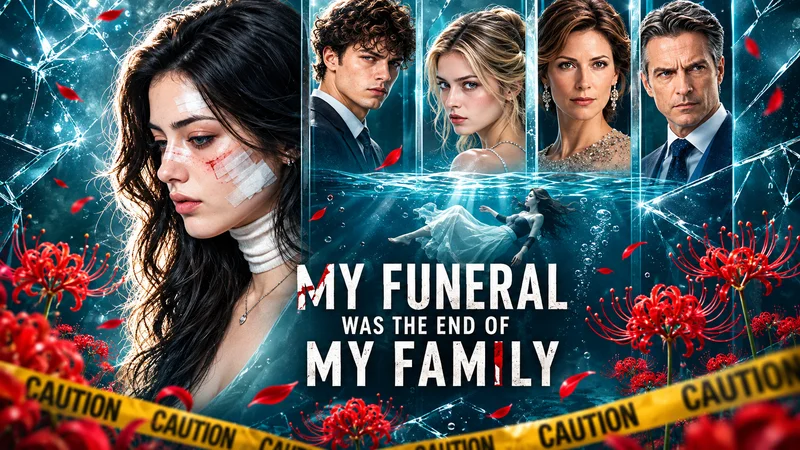
GoodShort explores a harsh question behind My Funeral Was the End of My Family: what happens when a woman’s loved ones recognize her worth only after they have lost her? This 52-episode short drama follows Madison, a talented painter whose family, fiancé, and adopted sister become entangled in a devastating story of favoritism, betrayal, and regret. Its emotional hook is not a triumphant wedding or a sudden inheritance, but an act of abandonment in a burning car.
This My Funeral Was the End of My Family review examines the confirmed premise, Madison’s place within her family, the significance of her stolen artistic identity, and the way posthumous regret drives the narrative. The assessment draws on the title’s public GoodShort synopsis and supporting catalog information rather than claiming firsthand viewing of every episode. Specific performances and unverified late-story twists are therefore not rated as though they had been watched.
The early verdict is that the series offers a striking setup for viewers who enjoy emotional family dramas in which the consequences of cruelty arrive too late. Its strongest idea is the reversal of perspective: the people who refuse to see Madison’s pain must eventually confront it without being able to undo their choices. Whether that idea becomes moving or simply punishing depends on the execution of the episodes, but the foundation gives the story a distinct identity within the regret-driven short-drama genre.
My Funeral Was the End of My Family Review: The Quick Verdict
- Format: Vertical short-drama series, listed at 52 episodes.
- Central character: Madison, a gifted painter.
- Primary themes: Family favoritism, stolen identity, betrayal, loss, and delayed remorse.
- Main appeal: Watching hidden wrongdoing become impossible for the family to ignore.
- Potential drawback: An intensely tragic premise that may feel emotionally exhausting to some viewers.
What Is My Funeral Was the End of My Family About?
The central story in this My Funeral Was the End of My Family review follows Madison, a gifted painter whose loved ones repeatedly favor her adopted sister. The public story description says the sister takes away the family’s love, Madison’s fiancé, and even her art. Those losses work on different levels: romantic betrayal undermines trust, family rejection removes emotional security, and the loss of her artwork threatens something that belongs to Madison herself.
The conflict becomes irreversible during a car fire. Madison’s fiancé leaves her behind while attending to the adopted sister. The official synopsis says Madison dies and watches from beyond as the truth about her treatment emerges and her family turns against itself. The crucial choice is therefore not merely who receives affection at home. At the moment when safety matters most, Madison is the person left behind.
Why Their Betrayals Hit Differently
The Fiancé’s Choice in the Burning Car
For viewers reading a My Funeral Was the End of My Family review, the fiancé’s defining action is especially difficult to forgive. During a life-threatening emergency, he leaves Madison in danger. In an ordinary love-triangle drama, divided affection can be interpreted as indecision or selfishness. Here, the consequences are far more severe. His choice turns emotional neglect into physical abandonment.
The Adopted Sister and the Theft of Madison’s Life
The adopted sister’s apparent gains are broader than a romantic rivalry. According to the official description, she takes Madison’s art as well as the attention of her fiancé and family. The accumulation makes the betrayal feel systematic: Madison does not suffer one isolated disappointment but loses several sources of belonging and recognition to the same person.
Family Favoritism Is the Real Engine of the Tragedy

The central family question in this My Funeral Was the End of My Family review is not simply whether an adopted sister receives love. Adoption itself is not the problem. The conflict arises when affection appears to become a competition and Madison is repeatedly treated as the expendable person. That framing turns the family from a safe place into a source of ongoing rejection.
Many short dramas use unequal relationships to create immediate emotional stakes. In our earlier Poisoned by His Love review, the heroine’s family is also caught in a dangerous situation involving marriage and sacrifice. The meaningful difference here is that Madison’s tragedy centers on being denied protection by the very people whose loyalty she expected. The comparison helps clarify two distinct versions of family pressure rather than suggesting the plots are identical.
Why the Story Uses Death and Regret Instead of a Conventional Comeback
In a familiar revenge drama, a wronged protagonist survives, gathers evidence, and confronts the people who harmed her. This story’s official description takes a darker route: Madison dies and observes the truth emerging from beyond. The people left alive must face their own choices, while the central person they harmed cannot simply return to normal life.
This makes regret the engine of the premise. A confession may explain a lie. An apology may acknowledge a wrong. Neither can guarantee that the person who suffered will hear it or accept it. The emotional weight comes from that imbalance: recognition arrives after the chance to act differently has apparently passed.
A My Funeral Was the End of My Family review also needs to distinguish supernatural framing from a specific ending twist. The official summary supports Madison watching events after death. It does not support claims that she fakes her death, stages a public return, obtains a DNA result, or begins a new romance. Conflicting claims about those events should not be presented as verified scenes.
What Works Best About the Premise?
A strength worth noting in a My Funeral Was the End of My Family review is how immediately the stakes become clear. Madison is a capable artist whose loved ones abandon her emotionally and, at a critical moment, physically. The audience does not need a complex family tree to follow the central injustice. This directness fits a vertical series, where a strong conflict must be established quickly.
Losing a fiancé is familiar territory in romance melodrama. Having an adopted sister take credit for creative work adds another layer: the protagonist’s individual talent becomes part of the struggle. That detail helps the plot stand apart from stories built exclusively around a romantic rival.
Where the Drama Could Lose Viewers
A significant caution in any My Funeral Was the End of My Family review is emotional excess. A heroine who loses her family, fiancé, artistic identity, and life gives the audience several reasons to feel sympathy. But when suffering accumulates without enough space for characterization, tragedy can begin to feel like a mechanism designed only to provoke outrage. A strong version of this story would allow Madison to exist as a person rather than a collection of misfortunes.
Another risk lies in the family members’ remorse. Regret becomes dramatically meaningful when characters face their decisions honestly and experience believable consequences. If every revelation only produces louder accusations or sudden personality changes, the emotional payoff may weaken. This is an evaluation criterion, not a claim about how the unseen episodes are performed.
Ending and Spoilers: What Can Be Confirmed?
The official promotional description reveals Madison’s death and states that she watches the truth come out while her family turns against itself. These are advertised story elements, but they still disclose the central tragedy for readers who prefer to enter the series without prior knowledge.
Beyond that, reliable public evidence examined for this article does not establish the detailed final sequence. It would be misleading to declare that Madison secretly survives, identifies a specific mastermind in a courtroom, or reconciles with a particular character without dependable episode evidence. The most defensible description is that the story promises exposure and destructive remorse after Madison’s loss.
Who Is Most Likely to Enjoy It?
This My Funeral Was the End of My Family review is especially relevant to viewers drawn to betrayed-heiress plots, deeply dysfunctional families, cruel romantic choices, and stories where an irreversible loss exposes hidden wrongdoing. Its advertised premise places emotional justice above light romance. The appeal is watching people who once felt entitled to Madison’s loyalty confront the cost of that entitlement.
Viewers who dislike sustained humiliation, abandonment, or death-centered storytelling may want to skip it. Those hoping for a straightforward healing romance should also know that the official story description emphasizes regret and loss rather than a happy relationship. Choosing the series with those expectations makes its tone easier to judge fairly.
Frequently Asked Questions
How many episodes does the series have?
The official catalog lists 52 episodes, presented as a vertical short drama rather than a single feature-length film.
Who is the main character?
Madison is the central character. She is a gifted painter whose adopted sister becomes the focus of the family’s affection and is implicated in the loss of Madison’s fiancé and artistic recognition.
Does Madison die?
Yes. The official synopsis states that Madison dies after being abandoned in a burning car and then observes the consequences from beyond. It does not provide a fully detailed chronology of her death in that short description.
Is the cast confirmed?
Madison is an established character name, but the sources checked did not provide sufficiently reliable actor credits to identify the performers. Character names in secondary recaps should not be confused with verified cast information.
Final Thoughts
This My Funeral Was the End of My Family review finds a strong, unusually bleak premise at the heart of the series. Madison’s stolen art makes her loss personal, the burning-car abandonment gives the betrayal immediate consequences, and the prospect of her family unraveling after her death gives the story its central emotional question. The concept is compelling for viewers who enjoy regret-driven family melodrama, though no claim about the full production’s execution is warranted without a verified viewing record.