
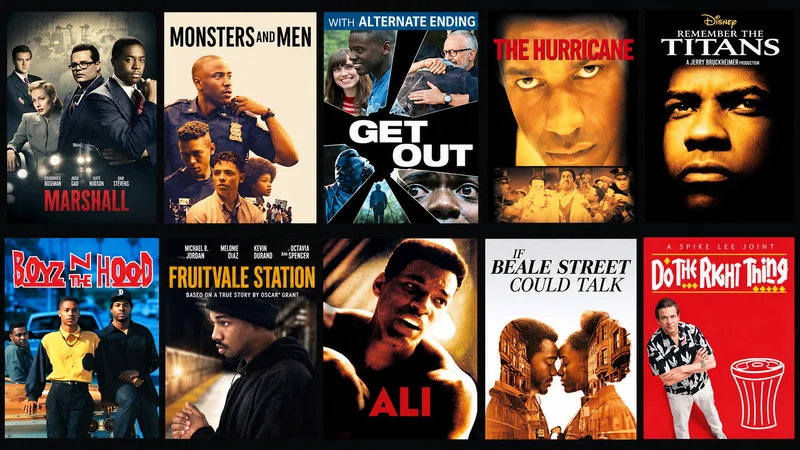
From intimate family conversations to defining moments in history, Black cinema has always offered more than a single kind of story. Its dramas explore love, friendship, ambition, creativity, injustice, and the ordinary choices that shape a life. At GoodShort, this collection brings together 40 feature films that reflect the range of Black experiences on screen, from influential American classics to stories set across Africa and its diaspora.
The best black drama movies can be tender, funny, romantic, politically urgent, or emotionally devastating. Some follow a person discovering their identity; others examine a family trying to stay connected or an artist fighting to be heard. The list prioritizes substantial Black characters and experiences, with room for filmmakers from different cultural backgrounds and works that blend drama with romance, sports, music, or history.
Choose by the kind of evening you want. Start with an uplifting story about achievement, a thoughtful romance, or a quiet family portrait before moving toward films with heavier subjects such as slavery, racism, or violence. Every entry includes three quick highlights and an individual, spoiler-conscious explanation of why it belongs here. These are feature films, not television series, and not all are suitable for younger viewers.
What Makes These 40 Black Drama Films Worth Exploring?
- Range of experiences: Black love, family traditions, artistic ambition, identity, community, and the struggle for justice.
- Different moods: Heartwarming, lyrical, funny, romantic, tense, and sometimes profoundly unsettling.
- Varied storytelling: Classic theatrical adaptations, coming-of-age stories, biographies, and formally inventive contemporary films.
- International perspectives: African American stories alongside films connected to Uganda, Kenya, Senegal, Zambia, and Malawi.
- Thoughtful viewing: Each movie has a distinct reason to watch, with heavier subject matter noted where useful.
Here, Black drama means a substantial drama centered on Black people, their relationships, or their lived experiences, not a claim that every film has the same cultural perspective. Several selections are directed by Black filmmakers; others are collaborations or adaptations worth discussing on their own terms. They are grouped by theme, not ranked as if artistic value could be measured with one universal score.
For an approachable introduction, choose Love & Basketball, Claudine, or Queen of Katwe. For something more contemplative, try Moonlight or Daughters of the Dust. The best black drama movies reward viewers who move between these moods instead of expecting every story to revolve around hardship.
Landmark Black Dramas That Helped Shape Cinema
These seven films introduce several traditions at once: theater adapted for the screen, urban realism, lyrical historical storytelling, and biographical drama. They are not interchangeable examples of one experience. Each creates its own language for portraying personal dignity and the pressures of a wider society.
The best black drama movies from earlier decades remain compelling because their characters want more than to survive. They want a home, meaningful work, affection, autonomy, or the freedom to shape their own futures.
1. A Raisin in the Sun (1961)
- Focus: A Chicago family debates what to do with life-insurance money.
- Tone: Intimate, confrontational, and hopeful.
- Best for: Viewers who appreciate stage-derived dialogue and family conflict.
Sidney Poitier plays Walter Lee Younger, whose hopes for a business collide with the aspirations of his mother, wife, and sister. Daniel Petrie’s adaptation of Lorraine Hansberry’s play makes the family’s cramped apartment feel like a place where several different American dreams must compete for the same limited resources. Claudia McNeil, Ruby Dee, and Diana Sands give those disagreements emotional weight. The film explores housing discrimination, generational responsibility, and the difference between earning money and finding dignity. It deserves its place because every relative has a persuasive vision of a better life, making the question of what the family should do deeply human.
2. Claudine (1974)
- Story: A single mother raises six children in Harlem.
- Special quality: A romance combines tenderness with sharp social observation.
- Audience: Fans of warm but unsentimental working-class stories.
Diahann Carroll plays Claudine, whose developing relationship with garbage collector Roop, played by James Earl Jones, is complicated by family obligations and the practical realities of poverty. Director John Berry refuses to make either romance or economic hardship the whole story. The children have their own personalities, and the adults must negotiate the tension between emotional needs and a welfare system that shapes their choices. The music and humor bring welcome warmth without erasing the pressures around them. Choose this for an unusually full portrait of Black domestic life, one where affection, frustration, and laughter are allowed to share the same room.
3. The Color Purple (1985)
- Central journey: Celie seeks independence after years of abuse.
- Strength: Female friendship and family connection support her growth.
- Content note: Sexual violence, domestic abuse, and racism.
Steven Spielberg’s adaptation of Alice Walker’s novel follows Celie across decades in the American South. Whoopi Goldberg gives her a quiet determination that gradually becomes more visible as she forms meaningful bonds with women including Sofia and Shug. Oprah Winfrey and Margaret Avery enrich a story in which some family relationships inflict serious harm while others offer the possibility of healing. The film is emotionally demanding, but its focus is not solely suffering; it also celebrates self-respect and solidarity. This is the 1985 dramatic adaptation, distinct from the 2023 musical film. It belongs here for the breadth of Celie’s emotional transformation.
4. Do the Right Thing (1989)
- Setting: One sweltering day on a Brooklyn block.
- Conflict: Everyday tensions escalate around race and neighborhood belonging.
- Best for: Viewers who enjoy energetic ensembles and social debate.
Spike Lee makes a Brooklyn neighborhood feel alive through overlapping conversations, music, comedy, and simmering disagreements. Mookie, played by Lee, works at a local pizzeria while residents bring different loyalties and frustrations into the street. The film’s bold colors and direct address create an atmosphere that can be funny one moment and disturbing the next. Rather than reducing the characters to spokespeople for a simple argument, it asks viewers to consider how individual choices unfold within larger social tensions. Choose it for filmmaking with distinctive energy and a story that leaves serious questions about community, anger, and responsibility open for discussion.
5. Daughters of the Dust (1991)
- Setting: A Gullah family gathers on the Sea Islands in 1902.
- Theme: Migration, ancestry, and women shaping their own futures.
- Style: Lyrical imagery and a layered, unconventional narrative.
Julie Dash follows the Peazant family as relatives weigh leaving their island home against remaining connected to the culture and memories rooted there. The women occupy the center of the drama, and their different attitudes toward change give the gathering its emotional charge. The film is less a conventional plot-driven period piece than a mosaic of voices, rituals, and visual details that carry meaning across generations. Its treatment of Gullah heritage offers a powerful alternative to narratives that discuss Black history only through oppression. Choose it when you want a richly textured work about cultural continuity, belonging, and the complexity of moving forward.
6. Boyz n the Hood (1991)
- Perspective: Friends grow up in South Central Los Angeles.
- Emotional center: A father’s guidance confronts dangerous surroundings.
- Content note: Gun violence, grief, and mature themes.
John Singleton follows Tre Styles, played by Cuba Gooding Jr., as he comes of age alongside friends whose opportunities and choices differ. Laurence Fishburne gives Tre’s father, Furious, a grounded authority without turning parenting into a magical solution to systemic problems. Ice Cube and Morris Chestnut make the friendships crucial to the stakes, so scenes of ordinary teenage life matter as much as the violence. The film deserves recognition not simply as a neighborhood crime story but as a drama about how young people imagine adulthood when safety cannot be assumed. Choose it for character, urgency, and a moving portrayal of parental responsibility.
7. Malcolm X (1992)
- Form: A sweeping biography of an influential Black leader.
- Lead performance: Denzel Washington portrays Malcolm through major life changes.
- Best for: Viewers interested in political history and personal transformation.
Spike Lee charts Malcolm X’s life from youth and imprisonment through religious conversion, public leadership, and evolving political thought. Denzel Washington’s performance gives the figure intensity while allowing uncertainty and change to remain part of the portrait. The film is ambitious in length and scope, but its most important thread is the relationship between a person’s private development and their public convictions. Its historical material is dramatized, so it should complement rather than replace nonfiction research. Choose it for an expansive biographical drama that treats identity as something a person can continually reconsider and redefine.
Family, Childhood, and the Search for Identity
- Parents, siblings, and children experience the same household differently.
- Coming-of-age stories reveal pressure alongside joy and affection.
- Memory, family secrets, and inherited expectations shape adulthood.
- Best for viewers who value intimate performances over action-driven plots.
These six films make the home a place of both safety and uncertainty. Some look at childhood through humor or imagination; others follow adults who cannot escape old disagreements. Their differences are important because no single household can represent an entire community.
The best black drama movies about family examine how people carry one another’s histories. A parent may see sacrifice where a child sees restriction, and a cherished object can mean something different to each relative.
8. Crooklyn (1994)
- Point of view: A young girl grows up in 1970s Brooklyn.
- Atmosphere: Music, neighborhood life, and family comedy.
- Viewer fit: Anyone drawn to richly observed childhood memories.
Spike Lee builds this semi-autobiographical family portrait around Troy Carmichael, whose lively home is filled with siblings, a hardworking mother, and an aspiring musician father. The film finds drama in chores, squabbles, street games, and the differences between how children and adults understand a household’s finances. Alfre Woodard’s performance as the mother gives the family its emotional gravity, while the period soundtrack makes the neighborhood feel inhabited. Rather than forcing the story into a sequence of major revelations, Lee lets small daily events accumulate. Choose it for a warm and sometimes painful recollection of childhood that values community as much as individual character.
9. Eve’s Bayou (1997)
- Setting: A prosperous Creole family in 1960s Louisiana.
- Core tension: A child’s discovery changes her understanding of her father.
- Distinctive feature: Southern Gothic atmosphere and uncertain memory.
Kasi Lemmons tells the story largely through young Eve, played by Jurnee Smollett, whose family life becomes increasingly complicated by her father’s infidelities and the stories relatives tell about one another. Samuel L. Jackson, Lynn Whitfield, and Debbi Morgan anchor a vivid ensemble. Folklore and spiritual imagery enrich the setting without removing the drama’s interest in family secrets and conflicting recollections. It is a particularly rewarding film for viewers who like questioning how reliable a remembered event can be. Choose it for the combination of lush period atmosphere, female perspectives, and a young protagonist confronting truths that adults would rather hide.
10. Soul Food (1997)
- Household: Three sisters maintain a family’s Sunday gathering.
- Theme: Traditions are tested by marriages, money, and resentment.
- Mood: Warm, dramatic, and full of competing personalities.
George Tillman Jr. places family rituals at the heart of a story about three sisters whose relationships are strained by personal crises and changing expectations. Vanessa Williams, Vivica A. Fox, and Nia Long play women who love one another without always behaving generously. The shared Sunday meal represents more than good cooking; it is a place where bonds are renewed and disagreements become impossible to ignore. The film’s pleasure comes from recognizing how easily ordinary family tension can become an outsized drama. Choose it for ensemble storytelling that celebrates Black family culture while allowing each relative their own imperfect motives.
11. Fences (2016)
- Source: August Wilson’s play about a Pittsburgh family.
- Central relationship: A father struggles with expectations for his son.
- Strength: Intense dialogue and remarkable performances.
Denzel Washington directs and stars as Troy Maxson, a former baseball player working as a sanitation worker in 1950s Pittsburgh. His disappointments shape the standards he imposes on his family, particularly his son Cory. Viola Davis gives Troy’s wife Rose a formidable emotional presence, making it clear that his viewpoint cannot be the only one that matters. The film uses extended conversations to show how care can become tangled with pride and control. Choose it for a challenging family portrait in which the past remains active inside every argument. The performances are powerful precisely because the characters are neither easy to approve of nor easy to dismiss.
12. Moonlight (2016)
- Journey: Chiron grows from boyhood into adulthood in Miami.
- Core themes: Identity, masculinity, affection, and belonging.
- Tone: Quiet, poetic, and deeply compassionate.
Barry Jenkins follows Chiron through three chapters of his life, tracing the people and pressures that influence how he sees himself. The story gives serious attention to friendship, first love, the insecurity of growing up with an addicted parent, and the rare kindness offered by unexpected mentors. Naomie Harris, Mahershala Ali, and the actors portraying Chiron at different ages give the film extraordinary emotional detail. Its power comes from what is left unsaid as much as from major events. Choose it for a lyrical coming-of-age drama that treats a Black queer protagonist’s inner life with patience and dignity rather than reducing him to a lesson.
13. The Piano Lesson (2024)
- Family dispute: Siblings disagree over an heirloom piano.
- Historical setting: Pittsburgh in 1936.
- Standout: Family legacy takes on a haunting physical presence.
Malcolm Washington adapts August Wilson’s play into a conflict between Boy Willie, who wants to sell the family’s piano, and Berniece, who refuses to surrender an object carrying ancestral history. John David Washington and Danielle Deadwyler give the disagreement genuine emotional weight, with Samuel L. Jackson portraying their uncle. The piano is more than property; it holds a history that the siblings interpret differently. The film incorporates supernatural elements, but its central drama is about inheritance, memory, and the cost of trying to move forward. Choose it for a forceful family story that asks whether honoring the past requires keeping it close or using it to build something new.
Black Love, Friendship, and Defining Your Own Future
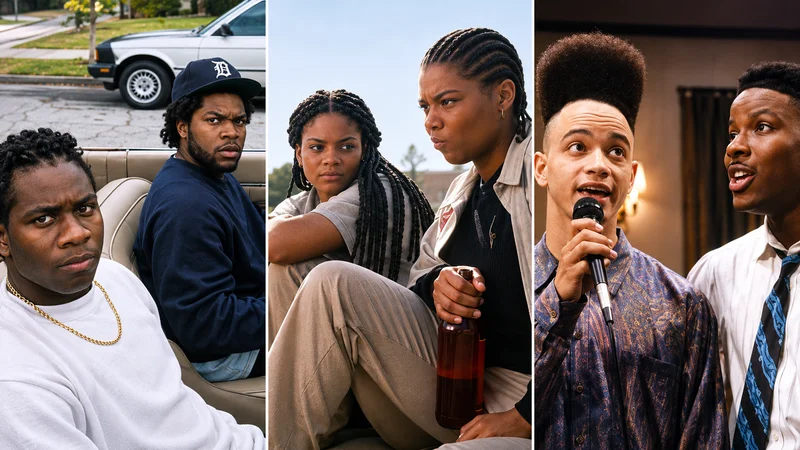
Black-centered drama can be playful and romantic without becoming superficial. These seven films explore love at different ages, the space between public identity and private desire, and the courage required to choose a life that feels authentic.
In the best black drama movies about relationships, chemistry is only the beginning. What matters is how two people handle ambition, vulnerability, timing, or pressure from the surrounding world.
14. Love Jones (1997)
- Romance: A poet and photographer meet in Chicago.
- Atmosphere: Jazz, spoken-word performances, and artistic friendship.
- Best for: Viewers who enjoy sophisticated, grown-up love stories.
Larenz Tate plays Darius, a poet drawn to Nia, a photographer played by Nia Long, in Theodore Witcher’s Chicago-set debut. Their attraction is immediate, yet each struggles with uncertainty about what commitment should look like. The city’s creative community feels central to the relationship, giving the characters friendships and ambitions beyond the romance itself. Music and conversation create an especially memorable mood without doing all the emotional work for the story. Choose it when you want Black love portrayed as thoughtful, sensual, and sometimes frustrating rather than as a simple reward at the end of an ordeal.
15. Love & Basketball (2000)
- Starting point: Two neighbors share a passion for basketball.
- Conflict: Romantic feelings and athletic aspirations develop together.
- Appeal: A long-form portrait of ambition and affection.
Gina Prince-Bythewood follows Monica and Quincy, played by Sanaa Lathan and Omar Epps, from childhood into adult relationships and demanding sports careers. Basketball is not decoration for the romance; the game provides a language for the characters’ competitiveness and a measure of what each is willing to sacrifice. The film gives Monica ambitions that belong to her rather than existing only in relation to Quincy. Choose this for a romance that grows alongside its characters and for a rare sports drama equally invested in a woman’s professional drive and emotional choices.
16. Beyond the Lights (2014)
- Protagonist: A young singer struggles with fame and personal control.
- Relationship: A police officer offers an unexpected connection.
- Best for: Fans of music-industry drama with a romantic core.
Gugu Mbatha-Raw plays Noni, a performer whose public image has been constructed around commercial success rather than her own sense of artistic freedom. When she meets Kaz, played by Nate Parker, the relationship exposes the difficulty of being seen as a person rather than a product. Gina Prince-Bythewood uses the romance to question expectations placed on women in entertainment, including how their bodies and identities are marketed. The film stands out because Noni’s emotional journey is also a struggle for creative agency. Choose it for an intimate music drama that understands why being admired by an audience does not guarantee being understood.
17. If Beale Street Could Talk (2018)
- Central bond: Tish and Fonny plan a future together in Harlem.
- Conflict: A criminal accusation separates the couple.
- Visual style: Rich colors and intimate close-ups support the romance.
Barry Jenkins adapts James Baldwin’s novel into a love story narrated by Tish, played by KiKi Layne, whose partner Fonny faces a charge that threatens their life together. Stephan James gives Fonny a vulnerability that deepens the injustice around him. The film moves between tenderness and legal frustration, never forgetting that the relationship existed before the case and deserves a future beyond it. Regina King’s performance as Tish’s mother gives family solidarity particular force. Choose it for a romance whose beauty sharpens, rather than softens, the impact of institutional harm on ordinary people.
18. The Photograph (2020)
- Story: A woman discovers letters and photographs left by her mother.
- Love story: A journalist enters her life as she revisits the past.
- Mood: Elegant, intimate, and reflective.
Issa Rae plays Mae, whose late mother’s photographs and correspondence draw her toward an emotional history she had never fully understood. A developing relationship with journalist Michael, played by LaKeith Stanfield, gives her an unexpected reason to consider what she wants from love in the present. Stella Meghie brings together two timelines without turning the film into a puzzle that needs a clever trick. Its slower pace allows affection, awkwardness, and inherited expectations to matter. Choose it for a romantic drama that treats Black intimacy as a subject worthy of patience, beauty, and adult conversation.
19. Pariah (2011)
- Lead character: Brooklyn teenager Alike is exploring her identity.
- Family stakes: Self-expression clashes with parental expectations.
- Best for: Audiences seeking an intimate queer coming-of-age story.
Dee Rees follows Alike, played by Adepero Oduye, as she navigates friendships, first affection, and the competing identities expected of her at home and beyond it. The film focuses on the interior life of a young Black lesbian rather than making her merely a symbol of a social issue. Her relationship with her parents is complicated by genuine love and serious misunderstanding, and the difficulty of finding privacy becomes part of the story’s emotional fabric. Choose it for precise performances and a portrayal of self-discovery that recognizes the courage involved in telling the truth about oneself.
20. American Fiction (2023)
- Lead: A frustrated novelist challenges assumptions about Black writing.
- Style: Publishing-industry satire mixed with family drama.
- Best for: Viewers who enjoy sharp humor with emotional depth.
Jeffrey Wright plays Thelonious ‘Monk’ Ellison, a writer who becomes increasingly frustrated by the narrow stories the publishing world seems willing to reward. An act of satire takes an unexpected turn just as Monk is dealing with the demands and disagreements of his family. Cord Jefferson’s film refuses to separate questions of cultural representation from the ordinary emotions of siblings, parents, and romantic partners. Its comedy is pointed, but the protagonist is not allowed to stand outside the weaknesses he critiques. Choose it for a smart, funny drama about art, authenticity, and the complicated responsibility of telling one’s own story.
Readers looking for more stories centered on parents, siblings, and the ways families change over time can also explore our best family drama movies collection. That selection approaches family relationships across many countries and backgrounds, complementing the Black-centered experiences in this guide.
History, Civil Rights, and the Fight for Justice
- Historical injustice is presented through people rather than abstract dates alone.
- Legal cases, education, protest, and community organizing create different forms of resistance.
- Several films dramatize real events and should not replace historical research.
- Best for viewers prepared for serious subject matter and emotionally difficult scenes.
These eight films focus on times when public institutions, racial violence, or economic systems placed enormous pressure on Black lives. Their approaches differ: some are courtroom stories, others biographies or coming-of-age dramas, and several challenge how history itself has been represented.
The best black drama movies about history are strongest when their protagonists remain complicated people rather than simplified symbols. This group contains some of the most disturbing material on the list, including enslavement, hate crimes, and abuse of children.
21. 12 Years a Slave (2013)
- Historical basis: Solomon Northup’s account of kidnapping and enslavement.
- Lead performance: Chiwetel Ejiofor portrays a free man stripped of his liberty.
- Content note: Severe physical violence, racism, and sexual abuse.
Steve McQueen adapts Northup’s memoir to follow a free Black musician who is kidnapped and sold into slavery in the pre-Civil War United States. Chiwetel Ejiofor’s restrained performance gives the story an essential human perspective, while Lupita Nyong’o’s portrayal of Patsey is unforgettable. The film does not make its subject comfortable or transform survival into a simple triumph. Its emotional force comes from the everyday degradation imposed on people and the difficulty of maintaining a sense of self under such conditions. Choose it for an unflinching historical drama, and approach its violence with appropriate care.
22. Selma (2014)
- Historical focus: The 1965 voting-rights campaign in Alabama.
- Key figure: Martin Luther King Jr. and a network of organizers.
- Viewer appeal: Political strategy and personal sacrifice.
Ava DuVernay follows the effort to secure voting rights through marches and organizing in Selma, emphasizing both the movement’s leadership and the dangers faced by ordinary participants. David Oyelowo plays Martin Luther King Jr. as a public figure who must make strategic decisions while confronting pressure in his private life. The film’s greatest strength is showing civil rights progress as collective work rather than the achievement of one exceptional speech. It is a dramatization of historical events, with some details and portrayals subject to debate. Choose it for a powerful account of organizing, courage, and the cost of demanding rights that should already have been protected.
23. Hidden Figures (2016)
- Real-life inspiration: Black women mathematicians working at NASA.
- Central figures: Katherine Johnson, Dorothy Vaughan, and Mary Jackson.
- Best for: Audiences seeking an accessible, uplifting historical drama.
Taraji P. Henson, Octavia Spencer, and Janelle Monáe portray three brilliant women whose work contributes to the early American space program. Theodore Melfi’s film balances technical challenges with the institutional barriers these women faced, giving each a distinct professional ambition. The story is inviting because mathematics and engineering become sources of dramatic satisfaction rather than obstacles to the audience. Its history is condensed and dramatized, but the larger achievement of Black women in aerospace is real. Choose it when you want a rousing story about expertise, perseverance, and the difference people can make when their abilities are finally recognized.
24. The Hate U Give (2018)
- Lead: Teenager Starr Carter navigates two social worlds.
- Turning point: She witnesses a police shooting of a friend.
- Content note: Gun violence, racism, and grief.
Amandla Stenberg plays Starr, who attends a largely white private school while living with her family in a predominantly Black neighborhood. After witnessing the shooting of her friend Khalil, she must decide how publicly to speak about what she saw. George Tillman Jr. adapts Angie Thomas’s novel into a drama that connects political pressure with teenage friendships, family fears, and questions of identity. Starr’s parents, played by Regina Hall and Russell Hornsby, are central because they must protect her without making her choices for her. Choose it for a young person’s perspective on how public events can abruptly reshape private life.
25. Just Mercy (2019)
- Legal story: An attorney challenges a death-row conviction.
- Real-life inspiration: Bryan Stevenson and Walter McMillian.
- Mood: Compassionate, determined, and emotionally demanding.
Michael B. Jordan plays Bryan Stevenson, who travels to Alabama to represent people who have been poorly served by the justice system. His work on behalf of Walter McMillian, portrayed by Jamie Foxx, exposes how unreliable testimony and racial prejudice can shape a case. Destin Daniel Cretton’s adaptation of Stevenson’s memoir dramatizes the difficulty of changing an official decision once it has become entrenched. The film’s power is not in a clever legal trick but in its attention to clients and families forced to live with uncertainty. Choose it for an accessible but serious account of advocacy and wrongful conviction.
26. Judas and the Black Messiah (2021)
- Setting: Chicago’s Black Panther movement in the late 1960s.
- Conflict: An informant enters the orbit of Fred Hampton.
- Style: Historical political drama with thriller tension.
Daniel Kaluuya plays Black Panther leader Fred Hampton, while LaKeith Stanfield portrays William O’Neal, whose cooperation with law enforcement creates a dangerous double life. Shaka King builds suspense around competing motives, but the larger significance lies in Hampton’s organizing and the political circumstances surrounding the investigation. The film refuses to reduce its historical context to one man’s betrayal, even as the personal consequences become increasingly severe. Like many dramatizations, it compresses events and relationships. Choose it for charged performances and an unsettling examination of surveillance, loyalty, and the vulnerability of movements challenging established power.
27. Till (2022)
- Historical focus: Mamie Till-Mobley’s pursuit of justice for her son.
- Lead performance: Danielle Deadwyler portrays a grieving mother.
- Content note: Racial terror, the murder of a child, and grief.
Chinonye Chukwu centers the story on Mamie Till-Mobley after the murder of her 14-year-old son Emmett in 1955 Mississippi. Danielle Deadwyler’s performance makes the mother’s grief inseparable from her determination to expose what happened. Instead of turning the film into a conventional crime mystery, it focuses on how a private loss becomes a public demand for accountability. The historical circumstances are traumatic, and the film is not appropriate for a casual viewing night. Choose it for a perspective that recognizes the agency and courage of a mother whose actions helped galvanize a wider movement.
28. Nickel Boys (2024)
- Adaptation: Colson Whitehead’s novel about a brutal reform school.
- Distinctive technique: First-person visual perspective places viewers close to the boys.
- Content note: Racist institutional violence and child abuse.
RaMell Ross follows Elwood Curtis, a promising Black teenager sent to a Florida reform school during the Jim Crow era, and his bond with fellow student Turner. Ethan Herisse and Brandon Wilson portray the boys, whose different responses to danger create a moving contrast between hope and survival. Ross’s unusual camera approach makes the experience less like watching a conventional historical drama from a safe distance. The story is fictional but inspired by the history of abusive institutions. Choose it for formally daring filmmaking and an emotionally serious examination of how young lives are shaped by systems designed to deny them dignity.
Music, Sports, Work, and the Drive to Become More
- Performers, athletes, and ordinary workers pursue demanding goals.
- Achievement brings new responsibilities rather than automatically solving every problem.
- Several films draw on real lives while reshaping events for the screen.
- Best for viewers looking for inspiration without one-dimensional heroes.
These seven selections show another side of Black drama: the desire to create, compete, provide, and be taken seriously. Some follow celebrated performers or athletes; others explore how art helps a person hold on to hope when ordinary freedom has been taken away.
Many of the best black drama movies about ambition complicate the familiar success story. They ask who is allowed to dream, what pressure does to a relationship, and how to value a person beyond the trophies or public applause.
29. What’s Love Got to Do with It (1993)
- Subject: The life and career of singer Tina Turner.
- Lead performances: Angela Bassett and Laurence Fishburne.
- Content note: Domestic violence and coercive relationships.
Angela Bassett portrays Tina Turner as she develops into an electrifying performer while navigating an abusive marriage to musician Ike Turner, played by Laurence Fishburne. Brian Gibson’s biographical drama draws on Turner’s life but condenses and reshapes events. The musical performances are an attraction, yet the emotional story lies in the struggle to reclaim personal and professional autonomy. Bassett makes the difference between the confidence of the stage and vulnerability away from it painfully clear. Choose it for a forceful portrayal of a woman asserting control over her future, while remembering that the film is a dramatization rather than a definitive biography.
30. Ray (2004)
- Portrait: Musician Ray Charles across formative decades.
- Lead: Jamie Foxx plays a groundbreaking performer.
- Themes: Talent, personal responsibility, and addiction.
Jamie Foxx portrays Ray Charles as he develops a sound that blends musical traditions and builds a career despite major personal obstacles. Taylor Hackford connects performances to memories, family relationships, and the musician’s struggles with substance use. The film gives viewers a sense of the creative energy behind the music without suggesting that exceptional talent excuses every private decision. Its biographical structure includes dramatic compression, so not every moment should be read as a literal historical account. Choose it for an absorbing music drama whose most interesting question is how a person with extraordinary gifts handles the demands placed on everyone close to him.
31. The Pursuit of Happyness (2006)
- Family story: A father cares for his son amid economic insecurity.
- Goal: An unpaid internship may offer a different future.
- Best for: Viewers seeking an emotional story of perseverance.
Will Smith plays Chris Gardner, a struggling salesman who takes a risky opportunity to train for a new career while raising his young son. Jaden Smith portrays the child whose safety gives the father’s decisions their emotional urgency. Gabriele Muccino’s film is inspired by Gardner’s experiences but turns them into a dramatized narrative. Its strongest moments show practical care under pressure: finding somewhere to sleep, protecting a child from uncertainty, and continuing to show up after setbacks. Choose it for an accessible father-son drama, with the understanding that its inspirational arc is not a universal explanation of how people escape poverty.
32. Creed (2015)
- Protagonist: Adonis Johnson pursues a boxing career.
- Relationship: Rocky Balboa becomes an unlikely mentor.
- Best for: Fans of sports drama grounded in character.
Michael B. Jordan plays Adonis, the son of boxer Apollo Creed, who wants to establish an identity in the ring without being defined entirely by his father’s reputation. Ryan Coogler gives the story fresh energy through Adonis’s relationship with trainer Rocky Balboa, played by Sylvester Stallone, and musician Bianca, played by Tessa Thompson. The boxing sequences are exciting, but the emotional substance lies in mentorship, grief, and self-definition. Choose it even if you are not a devoted boxing fan: the film’s most satisfying victories involve learning how to accept support without surrendering ownership of your future.
33. King Richard (2021)
- Real-life inspiration: The early tennis careers of Venus and Serena Williams.
- Focus: Their father’s determination and parenting decisions.
- Mood: Energetic, family-centered, and often uplifting.
Will Smith portrays Richard Williams as he plans a path into competitive tennis for daughters Venus and Serena despite limited resources and an exclusive sporting culture. Aunjanue Ellis gives their mother Oracene an essential perspective, making the story about family effort rather than one person’s vision alone. Reinaldo Marcus Green’s film dramatizes the family’s history and centers on the difficult balance between ambition, protection, and a child’s independence. Choose it for an inspiring sports drama where the family’s relationships matter as much as victories. It is also worth watching critically for how biographical films select whose viewpoint leads the narrative.
34. The Fire Inside (2024)
- Subject: Boxer Claressa Shields’s rise from Flint, Michigan.
- Partnership: A young athlete and her demanding coach.
- Key idea: Winning does not remove unequal opportunities.
Ryan Destiny plays Claressa Shields, whose fierce determination carries her toward the 2012 Olympic Games with the help of coach Jason Crutchfield, portrayed by Brian Tyree Henry. Rachel Morrison directs from a screenplay by Barry Jenkins, giving the familiar sports-film structure a more searching second question: what happens after a historic achievement when financial and professional barriers remain? The film is inspired by Shields’s real experiences while adapting them for drama. Choose it for an energetic portrait of athletic perseverance that does not mistake a medal for the end of the struggle.
35. Sing Sing (2024)
- Setting: A theater program inside a New York prison.
- Protagonist: An incarcerated man finds purpose in performance.
- Special feature: A cast that includes formerly incarcerated performers.
Colman Domingo plays Divine G, a man imprisoned for a crime he did not commit who participates in a theater group at Sing Sing Correctional Facility. When the company begins preparing an original comedy, performance opens difficult conversations about identity, trust, and the freedom to imagine another life. Greg Kwedar’s film draws on real experiences and features Clarence Maclin and other performers with firsthand knowledge of incarceration. Its dramatic achievement is to look at the men as artists and collaborators rather than defining them entirely by the prison around them. Choose it for a moving argument that creativity can preserve dignity under severe restrictions.
Black Stories Across Africa and Beyond Hollywood
- Films connected to Uganda, Zambia, Kenya, Senegal, and Malawi widen the geographic picture.
- Romance, childhood, education, and community ambition meet local social pressures.
- Some productions are international collaborations, not films financed solely in Africa.
- Best for viewers curious about diverse African settings and filmmaking styles.
Black experiences on screen extend far beyond the United States. These five films are rooted in African lives and settings while varying widely in tone and production background. Some are gentle, family-friendly dramas; others use romance, satire, or supernatural imagery to ask difficult questions.
The best black drama movies become a richer watchlist when viewers include multiple national cinemas rather than treating one country as representative of an entire diaspora. These films are good places to begin, not an exhaustive survey of African filmmaking.
36. Queen of Katwe (2016)
- Place: Katwe, a neighborhood in Kampala, Uganda.
- Story: A girl discovers a talent for competitive chess.
- Best for: Viewers wanting a warm sports-and-family drama.
Madina Nalwanga plays Phiona Mutesi, whose life changes when she meets chess coach Robert Katende, portrayed by David Oyelowo. Lupita Nyong’o plays her mother Harriet, whose concern for the family adds credibility to the sacrifices involved in competition. Directed by Mira Nair, this American-produced film tells a Ugandan story and was filmed in African locations. It is inspired by Phiona’s life, with events shaped for a feature narrative. Choose it for an inviting portrayal of a young person’s intellectual ambition, one that recognizes the family and community supporting her rather than making success seem like a solitary miracle.
37. I Am Not a Witch (2017)
- Setting: A rural Zambian community.
- Premise: A young girl is accused of witchcraft.
- Style: Social satire mixed with disturbing absurdity.
Rungano Nyoni’s feature debut follows Shula, a child who is labeled a witch and sent to live among women subjected to a cruel system of control. Margaret Mulubwa gives the central performance striking restraint while the film moves between colorful imagery and deeply troubling circumstances. Its surreal details are not presented as a simple documentary account of life in Zambia. Instead, they expose how superstition, official authority, and economic exploitation can reinforce one another. Choose it for inventive filmmaking with a serious moral purpose, though the treatment of a vulnerable child makes the story upsetting in places.
38. Rafiki (2018)
- Location: Nairobi, Kenya.
- Romance: Daughters of rival politicians grow close.
- Visual identity: Bright colors and youthful energy.
Wanuri Kahiu follows Kena and Ziki, two young women whose growing affection collides with their families’ political rivalry and their community’s expectations. Samantha Mugatsia and Sheila Munyiva make the relationship warm and vulnerable, while the vivid color palette insists that the story can contain joy as well as danger. The film’s portrayal of a same-sex relationship brought controversy and censorship in Kenya, but its significance should not reduce the characters to that public debate alone. Choose it for a tender coming-of-age romance rooted in a specific city, with an emphasis on the possibility of hope and self-determination.
39. Atlantics (2019)
- Setting: Dakar, Senegal.
- Central relationship: Two lovers are separated by economic pressure.
- Genre blend: Social drama, romance, and supernatural elements.
Mati Diop’s feature follows Ada, whose relationship with construction worker Souleiman is threatened by unpaid wages, migration, and a marriage arranged around financial security. The film gradually blends everyday social concerns with mysterious events, using atmosphere and sound to express longing and anger. Mame Bineta Sane gives Ada an inner life that extends beyond the men making choices around her. The supernatural turn is unusual but serves the story’s concern with lives affected by inequality and loss. Choose it when you want an evocative, poetic drama that offers a perspective on migration different from a straightforward issue film.
40. The Boy Who Harnessed the Wind (2019)
- Country and story: A teenage boy in Malawi faces a devastating drought.
- Solution: He hopes engineering can help his village.
- Best for: Families interested in science, resilience, and community.
Maxwell Simba plays William Kamkwamba, who becomes fascinated with engineering while his village struggles with food shortages. He hopes to build a wind-powered system that might improve his family’s situation, but convincing adults to risk precious resources is difficult. Chiwetel Ejiofor directs and portrays William’s father, allowing their disagreement to become a serious family conflict rather than a simple opposition between old and new ideas. Based on a real person’s story, the film is dramatized but rooted in a compelling account of resourcefulness. Choose it for an uplifting conclusion to this list that celebrates education, cooperation, and the power of a young person’s curiosity.
Who Will Enjoy These Films and Why Do They Matter?
Viewers interested in family relationships can begin with A Raisin in the Sun, Crooklyn, Soul Food, or The Piano Lesson. The stories have very different moods, but each gives relatives conflicting reasons for wanting a better future. For romantic evenings, Love Jones, Love & Basketball, and The Photograph offer warmth and complexity, while If Beale Street Could Talk and Rafiki connect love with pressures outside the relationship. The best black drama movies to start with are not necessarily the most famous, but the ones whose tone matches what you want to experience.
For histories of public injustice, move toward Selma, Judas and the Black Messiah, Till, or Nickel Boys, allowing time for their distressing subject matter. If you want a more encouraging story about work and talent, Hidden Figures, Creed, The Fire Inside, or Queen of Katwe may be better choices. Moonlight, Pariah, and American Fiction are particularly rewarding for audiences drawn to questions of identity and the right to define oneself.
What gives this cinema its lasting appeal is not one shared mood or message. These films explore people whose professions, generations, neighborhoods, and relationships differ, while confronting the tendency to reduce Black life to a handful of familiar narratives. Many include adult content, violence, abuse, or grief; review the individual film’s rating rather than assuming that a drama focused on family or history is appropriate for children.
Frequently Asked Questions
What are the best black drama movies for beginners?
Claudine, Love & Basketball, Hidden Figures, and Queen of Katwe are approachable starting points with distinctive characters and a range of emotional tones. Moonlight is another strong choice for viewers who prefer quiet, reflective storytelling.
Which Black drama films are especially emotional?
Moonlight, Fences, If Beale Street Could Talk, 12 Years a Slave, Till, and Nickel Boys explore difficult experiences. Their subjects and intensity vary considerably, so checking content warnings is important.
Are there Black drama movies about romance instead of historical injustice?
Yes. Love Jones, Love & Basketball, Beyond the Lights, The Photograph, and Rafiki place affection and self-discovery at the center, although outside circumstances still affect their relationships.
Which films are inspired by real people or events?
Malcolm X, 12 Years a Slave, Selma, Hidden Figures, Ray, King Richard, The Fire Inside, and The Boy Who Harnessed the Wind draw on historical lives or events. They dramatize material and should not be taken as exhaustive factual records.
Does this list include Black cinema from outside the United States?
Yes. Rafiki is set in Kenya, Atlantics in Senegal, and I Am Not a Witch in Zambia. Queen of Katwe tells a Ugandan story through an American production, while The Boy Who Harnessed the Wind is set in Malawi and made through international collaboration.
Final Thoughts
The best black drama movies show why representation is richer when it makes room for contradiction. Do the Right Thing brings social pressure into a lively neighborhood, Love Jones gives romance sophistication and humor, and Sing Sing finds creative freedom in an unlikely place. The historical films are vital, but stories about music, growing up, family meals, and falling in love matter just as much.
These 40 feature films provide many different routes into Black-centered drama. Try a classic, follow it with a modern love story, and then explore a film from another part of the diaspora. The most rewarding watchlist is one that lets people be more than a single theme.