
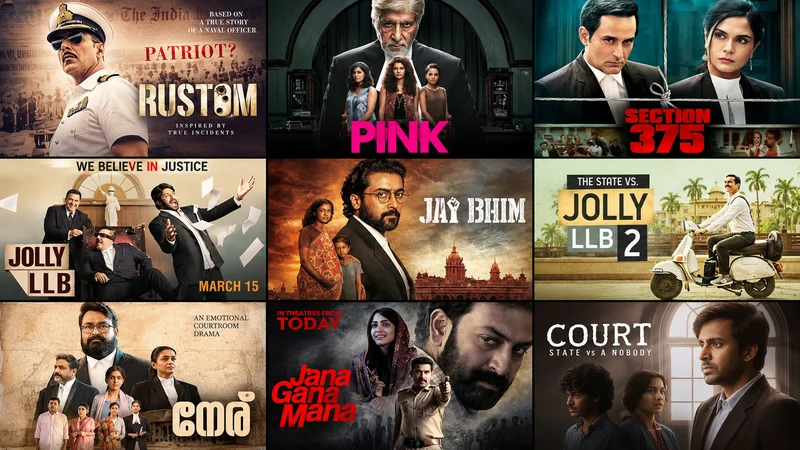
A courtroom can be more gripping than a car chase. One hesitant witness, a missing document, or an overlooked piece of evidence can change someone’s future in seconds. At GoodShort, this collection brings together 30 films about lawyers, juries, lawsuits, and people struggling to make the law deliver something resembling justice. The stories range from classic murder trials to modern battles against powerful institutions.
The best legal drama movies are not all built around dramatic closing arguments. Some follow the difficult work behind a case, others place a jury under pressure, and a few focus on families whose lives are rearranged by the courts. This guide includes historical dramas, legal thrillers, sharp courtroom comedy, and international films that question whose voices the system hears.
Each recommendation is a feature film, with the release year shown alongside its title. Bullet points identify the legal conflict and viewing mood, followed by a spoiler-conscious explanation of what makes the movie distinctive. These are film recommendations, not lessons in real-world legal procedure, and dramatizations inspired by actual cases should not be treated as complete historical records.
What Makes a Legal Drama Worth Watching?
- Courtroom suspense: Witnesses, objections, jury deliberations, and conflicting accounts can change a case.
- Different branches of law: Criminal defense, family disputes, civil claims, military trials, and constitutional concerns.
- Ethical dilemmas: Lawyers must weigh evidence, personal loyalties, and their duties to clients.
- Viewing moods: Rousing speeches, quiet investigations, dark thrillers, and courtroom comedy.
- Global perspective: Films from several countries show how the struggle for fairness takes different forms.
These recommendations focus on feature films in which a legal proceeding, lawyer’s work, or dispute about rights materially drives the story. A few, including Erin Brockovich and Michael Clayton, spend less time inside a courtroom but remain firmly centered on legal advocacy and accountability.
For a first watch, try 12 Angry Men for an intimate study of reasonable doubt, My Cousin Vinny for humor, The Verdict for a lawyer’s moral comeback, or Anatomy of a Fall for a recent mystery. The list is organized by theme rather than pretending that every film can be ranked by a single objective score.
Classic Courtroom Dramas That Defined the Genre
- Jury decisions, witness credibility, and reasonable doubt create tension without action spectacles.
- Attorneys face ethical questions alongside the practical demands of defending a client.
- Historical settings reveal how prejudice and public pressure influence the law.
- Best for viewers who appreciate dialogue, measured pacing, and moral complexity.
These six classics show why a courtroom can become a perfect dramatic stage. Some place the audience beside the lawyers, while others make the jury or the judge the true center of the story.
The best legal drama movies from this era do more than deliver a verdict. They ask whether fair procedures can overcome bias, whether an advocate should defend an unpopular client, and whether justice is possible when a society’s values are themselves on trial.
1. 12 Angry Men (1957)
- Central question: Can one juror persuade eleven others to reconsider a murder charge?
- Distinctive setting: Nearly the entire story unfolds in a jury room.
- Ideal viewing: Anyone who enjoys close attention to evidence and persuasion.
Sidney Lumet’s feature debut begins after a teenager has been tried for murder. Eleven jurors are ready to convict, but Juror 8, played by Henry Fonda, wants to discuss the testimony before deciding whether the evidence meets the required standard. The film makes disagreement an act of genuine suspense: every recollection of a witness, every prejudice exposed, and every change in tone alters the room. There is little conventional action and almost no courtroom spectacle, yet the personal stakes feel enormous. Watch it to see how a compelling legal drama can emerge from ordinary people being asked to think carefully, listen to one another, and accept the weight of doubt.
2. Witness for the Prosecution (1957)
- Legal conflict: A murder suspect relies on testimony that may not hold up.
- Creative signature: Billy Wilder adapts an Agatha Christie courtroom mystery.
- Viewer appeal: Fans of sharp cross-examinations and carefully guarded secrets.
An aging British barrister, Sir Wilfrid Robarts, returns to work to defend Leonard Vole, a man accused of murdering a wealthy woman. Charles Laughton makes the advocate witty and determined, while Tyrone Power and Marlene Dietrich bring uncertainty to the central relationships. Billy Wilder builds the film around how witnesses present themselves and how easily apparent loyalty can be misread. The pleasure lies in watching testimony change the meaning of earlier conversations, not in observing action outside the trial. It belongs on this list because the legal process and the mystery reinforce one another. Avoid reading the ending, since its revelations are a major part of the experience.
3. Anatomy of a Murder (1959)
- Case: A defense attorney represents a soldier accused of killing a man.
- Focus: Courtroom strategy, witness questioning, and uncomfortable ambiguity.
- Best for: Viewers interested in the mechanics of a criminal trial.
James Stewart plays Paul Biegler, a small-town Michigan lawyer defending an Army lieutenant who killed a man he claims assaulted his wife. Otto Preminger gives unusually sustained attention to the practical business of preparing witnesses, arguing legal theories, and challenging testimony. The trial does not provide an easy separation between factual truth and effective advocacy, which makes Biegler an intriguing rather than spotless hero. Lee Remick and Ben Gazzara add competing perspectives to a case involving sexual violence. Duke Ellington’s score gives the film unexpected personality. Choose it for a patient, intelligent procedural that lets courtroom technique shape the drama rather than interrupting it.
4. Judgment at Nuremberg (1961)
- Setting: A postwar tribunal examines the conduct of German judges.
- Core issue: Professional responsibility under an unjust political regime.
- Mood: Serious, historical, and ethically demanding.
Stanley Kramer’s drama follows an American judge, played by Spencer Tracy, presiding over a trial of German legal officials after World War II. The defendants are accused of using their positions to support an oppressive system, raising the question of how professional duty can become an excuse for participation in injustice. Burt Lancaster, Maximilian Schell, and an extensive ensemble give the arguments emotional and intellectual force. Although inspired by the Nuremberg judges’ trial, the film is a dramatization with fictionalized characters and situations. Its strength is its refusal to let legal responsibility disappear into vague claims of obedience. Choose it when you want a courtroom film with historical scale and difficult moral implications.
5. To Kill a Mockingbird (1962)
- Defense: Atticus Finch represents a Black man facing a grave accusation.
- Themes: Racial prejudice, childhood, and moral courage.
- Viewing note: Historical racism and allegations of sexual assault are central.
Gregory Peck plays lawyer Atticus Finch, whose defense of Tom Robinson places him against the racial prejudices of a small Alabama community in the 1930s. Robert Mulligan adapts Harper Lee’s novel through a story also seen from the perspective of Atticus’s children, keeping family life and a criminal trial intertwined. The courtroom sequences are powerful because the audience understands the gulf between evidence and what some people are willing to believe. The film’s moral viewpoint is clear, but its period portrayal deserves thoughtful viewing rather than uncritical nostalgia. It remains an essential example of legal cinema confronting the way a community’s assumptions can overwhelm an individual’s rights.
6. The Caine Mutiny (1954)
- Court-martial: A naval officer is tried after removing his ship’s captain from command.
- Main dilemma: Was the action necessary, or was it insubordination?
- Recommended for: Fans of military ethics and conflicting testimony.
During World War II, a U.S. Navy officer takes command of his vessel away from Captain Queeg during a dangerous storm, prompting a court-martial. Humphrey Bogart gives Queeg a volatile mixture of authority and insecurity, while the defense must establish what happened under extreme pressure. Edward Dmytryk’s adaptation of Herman Wouk’s novel gains much of its force from the uncertainty over leadership, loyalty, and responsibility. The trial reframes events that once seemed obvious to the men involved. Choose this for a military legal drama that does not reduce duty to blind obedience or insubordination to simple heroism. The emotional aftermath of the testimony matters as much as the formal case.
Lawyers, Families, and Personal Stakes in the Courtroom
- Custody disputes, professional failure, and criminal accusations transform private lives.
- Defense lawyers must balance loyalty to clients with their own doubts.
- Humor and intimate character work provide contrast to high-pressure trials.
- Best for viewers who want strong performances and relationships as well as legal arguments.
Not every legal drama revolves around a historic trial. In these six films, a courtroom becomes the place where personal relationships, careers, and old certainties are tested.
The best legal drama movies in this group make the people behind a case as memorable as the case itself. A lawyer’s reputation, a child’s stability, or a family member’s freedom can carry the tension more effectively than a surprise witness.
7. Kramer vs. Kramer (1979)
- Legal issue: A custody dispute follows a marriage breakdown.
- Emotional center: A father’s evolving bond with his young son.
- Best for: Viewers interested in family drama rather than criminal trials.
Ted Kramer is an advertising executive whose wife Joanna leaves, forcing him to take responsibility for their young son and reconsider what parenthood means. When the parents later face a custody battle, the legal dispute exposes the gap between their private experiences and the arguments available in court. Dustin Hoffman and Meryl Streep give the roles emotional complexity, while Justin Henry makes the child’s perspective impossible to ignore. Robert Benton’s film is not a legal procedural from beginning to end, but family law becomes central to its most painful decisions. Choose it if you want a drama that takes the emotional consequences of a case as seriously as the formal outcome.
8. The Verdict (1982)
- Case: A struggling attorney takes a medical malpractice claim to trial.
- Character arc: A chance at personal and professional redemption.
- Audience: Viewers who appreciate moral tension over easy victories.
Paul Newman plays Frank Galvin, an alcoholic Boston lawyer whose career has almost collapsed when a medical malpractice case presents an opportunity to act with integrity. He must confront powerful opponents, legal setbacks, and the temptation to accept the easier settlement. Sidney Lumet makes the trial a test of character rather than a demonstration of one dazzling courtroom trick. Newman carries the film through pauses, doubt, and the burden of a man who knows he has wasted chances before. The contrast between ordinary clients and well-funded institutions gives the story its force. Watch it for a restrained, unsentimental portrait of advocacy and the courage required to continue after repeated setbacks.
9. A Few Good Men (1992)
- Conflict: Two Marines face court-martial over another Marine’s death.
- Highlight: A clash between military hierarchy and the search for truth.
- Style: Fast dialogue, high stakes, and tense testimony.
Young military lawyer Daniel Kaffee, played by Tom Cruise, defends two Marines accused of killing a fellow serviceman at Guantanamo Bay. JoAnne Galloway, played by Demi Moore, presses him to look beyond a quick plea deal and investigate what orders were actually given. Rob Reiner’s film, written by Aaron Sorkin, brings together legal strategy and military culture while Jack Nicholson’s commanding officer embodies an intimidating version of institutional authority. The case is gripping because the defendants’ actions cannot be understood without examining the system that shaped them. This is an excellent choice for viewers who want memorable exchanges and a courtroom confrontation driven by questions of responsibility.
10. My Cousin Vinny (1992)
- Premise: An inexperienced New York lawyer defends relatives in Alabama.
- What stands out: Forensic detail and courtroom procedure become comic material.
- Best for: Viewers who want an entertaining legal comedy.
Two young men traveling through Alabama are mistaken for murder suspects, leaving Vinny Gambini, a novice attorney from New York, to handle their defense. Joe Pesci gives Vinny a wonderful mixture of confidence and inexperience, while Marisa Tomei’s Mona Lisa Vito brings a practical understanding of automobiles that proves crucial to the case. Jonathan Lynn turns legal preparation, witness credibility, and expert testimony into lively comedy without abandoning the central murder accusation. It is a welcome reminder that a courtroom movie can be funny and still reward attention to evidence. Choose it when you want lighter entertainment alongside a surprisingly satisfying puzzle.
11. Philadelphia (1993)
- Legal focus: An attorney challenges workplace discrimination after losing his job.
- Human story: Stigma, illness, and the right to fair treatment.
- Viewing note: Depictions of AIDS-related discrimination and homophobia.
Tom Hanks plays Andrew Beckett, a lawyer who believes his law firm fired him because he has AIDS. Seeking representation, he approaches Joe Miller, played by Denzel Washington, who must confront his own prejudices while preparing the case. Jonathan Demme’s film uses a civil lawsuit to dramatize the human consequences of discrimination, making legal arguments inseparable from dignity and belonging. The performances give the story persuasive emotional weight without treating the courtroom as its only important setting. It is especially meaningful as a film of its era, when public fears and misconceptions about HIV and AIDS had devastating effects on people’s lives. Choose it for a deeply human civil-rights drama.
12. In the Name of the Father (1993)
- Case: A young man is wrongfully convicted after a pub bombing.
- Family connection: Father and son endure the consequences together.
- Background: A dramatization inspired by the Guildford Four case.
Daniel Day-Lewis plays Gerry Conlon, a Belfast man whose life is shattered when he is imprisoned for a bombing he did not commit. His father Giuseppe, played by Pete Postlethwaite, also becomes entangled in the injustice. Jim Sheridan builds the story around coerced confessions, legal failures, and the crushing effect of wrongful imprisonment on family relationships. Emma Thompson plays the lawyer who helps challenge the convictions. The film compresses and changes aspects of real events, so it is not a documentary record. It belongs here because the ultimate legal struggle gains its emotional meaning from the bond between people harmed by the system they hoped would protect them.
Civil Rights, Corporate Accountability, and Legal Ethics

These six films show the law operating beyond a single murder trial. Civil litigation, public advocacy, and corporate pressure create dramatic stakes for people whose problems may be easy for powerful organizations to dismiss.
Here the best legal drama movies often follow difficult, unglamorous work: finding witnesses, reading documents, persuading people to speak, and deciding whether to keep fighting when a settlement seems easier.
13. A Time to Kill (1996)
- Legal dispute: A father is prosecuted after taking violent revenge.
- Themes: Racial injustice, anger, and the limits of legal protection.
- Content note: Sexual violence involving a child and racist threats.
In a Mississippi town, attorney Jake Brigance defends Carl Lee Hailey, a Black father who has killed the men accused of brutally attacking his daughter. Matthew McConaughey plays the lawyer, while Samuel L. Jackson gives the father a mixture of anguish and fierce resolve. Joel Schumacher’s adaptation of John Grisham’s novel places a criminal trial amid intimidation and racial hatred, forcing the characters to confront both the law and the community around it. The film’s emotional pitch is high, and its treatment of revenge invites debate rather than an easy legal lesson. Choose it for intense courtroom drama, with advance notice of disturbing subject matter.
14. The Rainmaker (1997)
- Conflict: A young attorney takes on a powerful insurance company.
- Underdog appeal: A poorly funded case against a much larger legal team.
- Ideal audience: Fans of David-versus-Goliath litigation stories.
Matt Damon plays Rudy Baylor, a new lawyer trying to build a career while representing clients who have little influence and few resources. His most consequential case pits a family against an insurance company accused of improperly refusing medical coverage. Francis Ford Coppola adapts John Grisham’s novel into a story that finds suspense in depositions, witness preparation, and the imbalance between two legal teams. Danny DeVito adds humor and practical savvy as Rudy’s resourceful associate. The film works because Rudy’s inexperience makes the case feel vulnerable at every step. Choose it for accessible courtroom drama with a clear ethical conflict and sympathetic clients.
15. A Civil Action (1998)
- Subject: Families seek accountability for possible water contamination.
- Approach: Scientific evidence and the financial burden of litigation.
- Mood: Somber, procedural, and driven by difficult compromises.
John Travolta plays Jan Schlichtmann, a personal injury lawyer who takes a case involving families who believe contaminated water contributed to their children’s deaths. What initially looks like a major lawsuit becomes a punishing struggle over evidence, expert witnesses, and the enormous cost of pursuing corporate defendants. Steven Zaillian’s film is adapted from Jonathan Harr’s nonfiction book and dramatizes real litigation. Its strength lies in showing that a morally urgent complaint does not automatically become an easy case to prove. Choose it if you are interested in the frustrating middle ground between legal truth, scientific uncertainty, and the resources necessary to keep a case alive.
If you particularly enjoy stories where conflicting accounts must be pieced together, our best crime mystery movies guide explores related puzzles through detectives, missing-person cases, and unreliable testimony. Those films emphasize solving a mystery, while this selection keeps the legal stakes in focus.
16. Erin Brockovich (2000)
- Investigation: A legal assistant uncovers concerns about contaminated water.
- Standout quality: Persistence and personal trust with affected families.
- Best for: Viewers who want character-driven investigative drama.
Julia Roberts plays Erin Brockovich, a single mother working at a small law office who notices troubling details in property records. Her investigation helps uncover claims of groundwater contamination affecting a California community. Steven Soderbergh gives the real-life-inspired story energy through Erin’s blunt personality, determined fieldwork, and ability to connect with people who have been ignored. Albert Finney provides an appealing contrast as attorney Ed Masry. Much of the action happens outside a courtroom, which makes it an important example of legal work as investigation and advocacy. It belongs here because the case depends on listening to ordinary residents and building trust as much as on formal argument.
17. North Country (2005)
- Legal action: A worker challenges sexual harassment in a mining workplace.
- Personal stakes: Speaking out threatens friendships and family stability.
- Content note: Harassment and threatening behavior.
Charlize Theron plays Josey Aimes, a single mother who takes a job at a Minnesota mine and faces persistent harassment from male coworkers. Determined to challenge the workplace culture, she becomes involved in a legal effort to hold the company accountable. Niki Caro’s film is inspired by the history of a landmark sexual harassment class-action lawsuit, but the characters and chronology are dramatized. Its legal significance emerges from the courage required to speak when the surrounding community may prefer silence. Choose it for a workplace drama in which a court case becomes an extension of the personal risks already confronting the protagonist.
18. Michael Clayton (2007)
- Legal world: A corporate law firm’s fixer confronts an ethical crisis.
- Thriller element: A major lawsuit exposes dangerous institutional interests.
- Viewer fit: Fans of morally complex professional dramas.
George Clooney plays Michael Clayton, a lawyer employed to solve problems for a powerful New York firm. When a colleague’s behavior jeopardizes a major class-action defense, Clayton finds himself drawn into a situation that threatens both his professional usefulness and his conscience. Tony Gilroy makes the legal world feel plausible without relying on a long courtroom trial. Tilda Swinton and Tom Wilkinson give the competing interests memorable human faces, while the story exposes the difference between representing a client and protecting a system at any cost. Choose it for a tightly controlled legal thriller where documents, reputations, and divided loyalties can be more dangerous than a public cross-examination.
Modern Legal Thrillers and High-Stakes Trials
- Defense attorneys and investigators confront cases with national or corporate consequences.
- Trial preparation, contested testimony, and hidden evidence provide the suspense.
- Some films reinterpret significant real-life legal battles for dramatic effect.
- Best for viewers wanting contemporary pacing and serious ethical choices.
Contemporary courtroom stories can move like thrillers without turning every lawyer into an action hero. These five titles investigate what happens when the case threatens careers, reputations, or even the legal system’s claim to fairness.
The best legal drama movies in this section connect legal tactics with pressures that extend beyond the trial. Some rely on a client’s trust, some on a public reckoning, and others on the patience to examine evidence that powerful interests have kept out of view.
19. The Lincoln Lawyer (2011)
- Premise: A defense lawyer works from the back of his Lincoln car.
- Central case: A wealthy new client brings unexpected complications.
- Best for: Viewers who enjoy twisty crime and legal suspense.
Matthew McConaughey plays Mickey Haller, a Los Angeles criminal defense attorney whose mobile office and flexible methods have made him successful. A case involving a rich client accused of assault appears promising until Haller notices details that threaten both his ethical assumptions and his other responsibilities. Brad Furman adapts Michael Connelly’s novel into a brisk thriller where the lawyer must think strategically while protecting people caught in the investigation. The film is separate from the later television adaptation of the books. Choose it for an entertaining mix of courtroom maneuvering, crime-mystery twists, and a protagonist whose sharp instincts do not always make his decisions comfortable.
20. Dark Waters (2019)
- Case type: Environmental litigation against a major chemical company.
- Main challenge: A lawyer must follow technical evidence across many years.
- Tone: Persistent, unsettling, and deliberately procedural.
Mark Ruffalo plays attorney Robert Bilott, a corporate defense lawyer whose work changes after a West Virginia farmer raises concerns about pollution affecting his property and animals. Todd Haynes builds the drama around documents, chemistry, and the slow accumulation of evidence connecting corporate conduct to public health risks. The film is inspired by Bilott’s real legal work, though it condenses events for narrative purposes. Anne Hathaway plays his wife, helping make the years-long professional commitment feel personal. This is an especially strong choice for viewers interested in the patient labor of litigation rather than a single dramatic verdict. The case grows more disturbing because the details are revealed gradually.
21. Just Mercy (2019)
- Legal struggle: An attorney seeks to overturn a death-row conviction.
- Human focus: The person facing execution is more than a case file.
- Viewing note: Racial discrimination and capital punishment are central.
Michael B. Jordan plays Bryan Stevenson, a young lawyer who travels to Alabama to represent people facing extreme disadvantages in the justice system. One major case concerns Walter McMillian, played by Jamie Foxx, whose conviction raises serious questions about unreliable testimony and racial bias. Destin Daniel Cretton bases the film on Stevenson’s memoir, dramatizing his work while keeping the clients’ humanity central. The legal strategy matters, but the film’s strongest moments reveal what prolonged uncertainty does to a person and their family. Choose it for a compassionate legal drama about persistence, wrongful conviction, and the burden of proving what officials may refuse to reconsider.
22. The Trial of the Chicago 7 (2020)
- Historical case: Antiwar protesters face federal conspiracy charges.
- Story engine: Courtroom clashes reveal competing views of protest and power.
- Style: Rapid dialogue and ensemble performances.
Aaron Sorkin writes and directs a dramatization of the prosecution that followed protests during the 1968 Democratic National Convention in Chicago. The defendants include activists with differing approaches to political change, while the courtroom becomes a site of conflict over procedure, authority, and public perception. The ensemble includes Sacha Baron Cohen, Eddie Redmayne, Mark Rylance, and Yahya Abdul-Mateen II. Sorkin’s dialogue gives the proceedings momentum, but viewers should remember that complex history has been compressed for drama. Choose this film for a lively political courtroom story that asks whether a trial can be fair when the surrounding public dispute is already polarized.
23. The Mauritanian (2021)
- Legal issue: A detainee remains at Guantanamo without criminal charges.
- Key figures: A defense lawyer and a military prosecutor confront evidence.
- Best for: Viewers interested in civil liberties and state power.
Tahar Rahim plays Mohamedou Ould Slahi, a Mauritanian man held for years at Guantanamo Bay without charge. Jodie Foster portrays attorney Nancy Hollander as she attempts to challenge the detention, while Benedict Cumberbatch plays military prosecutor Stuart Couch, whose pursuit of the facts becomes increasingly difficult. Kevin Macdonald’s film draws on Slahi’s memoir and real events, placing legal process alongside the physical and psychological consequences of confinement. It is a challenging watch, especially where mistreatment is depicted. Choose it for a human-centered legal drama that explores what happens when official suspicion replaces the ordinary safeguards associated with a criminal charge.
International Legal Dramas That Challenge the System
- Indian, Iranian, South Korean, Argentine, and French films examine different justice systems.
- Family disputes and political repression become legal conflicts with lasting consequences.
- Some use subdued realism, while others build suspense around major courtroom confrontations.
- Best for viewers who welcome subtitles and unfamiliar cultural perspectives.
These seven films widen the lens beyond the familiar American courtroom. The laws and social conditions vary, yet the human concerns feel recognizable: being heard, defending someone vulnerable, and deciding what counts as reliable evidence.
Some of the best legal drama movies are especially powerful because they resist a tidy verdict or uplifting speech. The courtroom may reveal a deeper injustice without having the power to settle it.
24. A Separation (2011)
- Country: Iran.
- Legal conflicts: Divorce and a dispute that grows from a caregiving arrangement.
- Best for: Viewers who enjoy carefully balanced moral dilemmas.
Asghar Farhadi follows Simin and Nader, a couple whose disagreement over leaving Iran leads toward divorce and difficult decisions about caring for Nader’s father. When Nader hires someone to help at home, a separate dispute develops and legal proceedings expose conflicting memories and motives. Leila Hatami and Peyman Moaadi give the marriage a painful realism, while the supporting characters have pressures of their own. The film is not interested in handing viewers an easy villain. Instead it shows how an apparently small choice can create competing obligations that the court cannot simply erase. Choose it for intimate legal drama that works like a mystery without relying on a detective.
25. The Attorney (2013)
- Origin: South Korea, set in Busan during the 1980s.
- Central change: A successful tax lawyer takes on a political defense case.
- Recommended for: Viewers interested in law and democratic rights.
Song Kang-ho plays Song Woo-seok, a businessman-like lawyer whose comfortable career is disrupted when a young man he knows is detained and accused in a politically charged case. Yang Woo-suk’s film is a fictionalized drama inspired by events connected to South Korea’s authoritarian era, not a literal biography of a former president. As the lawyer examines what happened to the accused students, his conception of professional responsibility changes. The courtroom scenes gain force because the risks to the defendants extend far beyond a single hearing. Choose it for a stirring legal drama about the moment a lawyer’s ambition gives way to an obligation to defend people with little power.
26. Court (2014)
- Origin: India; premiered in 2014 and released domestically in 2015.
- Case: An aging protest singer is accused of inciting a worker’s suicide.
- Style: Observational, restrained, and quietly satirical.
In Chaitanya Tamhane’s Indian film, folk singer Narayan Kamble is prosecuted after a sewage worker’s death, with the authorities alleging that a protest song encouraged suicide. Rather than concentrating on dramatic objections, the film watches routine hearings, delays, and the private lives of the defense lawyer, prosecutor, and judge. Its multilingual Mumbai setting is crucial, revealing how class and bureaucracy shape what appears possible inside court. The film premiered at Venice in 2014 and reached Indian theaters in 2015. Choose it if you want a slow, incisive portrait of the ordinary procedures through which an unjust system can persist. Its dry humor sharpens rather than softens the criticism.
27. Pink (2016)
- Origin: Hindi-language Indian courtroom drama.
- Legal themes: Consent, victim-blaming, and the credibility of women.
- Content note: Threats and sexual-assault-related allegations.
After an incident involving three young women and a group of influential men, the women face serious accusations and social pressure. An older lawyer, Deepak Sehgal, steps forward to defend them, putting the question of consent at the center of the trial. Amitabh Bachchan and Taapsee Pannu anchor Aniruddha Roy Chowdhury’s film, which uses courtroom exchanges to challenge stereotypes that confuse a woman’s lifestyle with legal permission. The film’s message is direct, but its emotional force grows from the vulnerability of people who must defend their reputations as well as their actions. Choose it for a socially engaged legal drama where a straightforward principle becomes difficult for an entire community to respect.
28. Jai Bhim (2021)
- Origin: Tamil-language Indian legal drama.
- Case: A woman searches for her husband after he disappears in police custody.
- Main themes: Custodial abuse, caste discrimination, and accountability.
Sengeni, a pregnant woman from an Indigenous Irular community, seeks help when her husband Rajakannu disappears after being taken into police custody. Advocate Chandru, played by Suriya, works to challenge official accounts and bring the truth before the court. Director T. J. Gnanavel uses the legal case to expose violence and prejudice directed at a marginalized community. The film draws inspiration from real events but dramatizes its characters and investigation. It contains distressing abuse and violence. Choose it for a forceful courtroom drama in which the act of finding evidence is inseparable from ensuring that people who are routinely ignored can be heard.
29. Argentina, 1985 (2022)
- Origin: Argentina; Spanish-language historical drama.
- Case: Prosecutors build a case against former military leaders.
- Best for: Viewers drawn to legal history and collective courage.
Ricardo Darin plays prosecutor Julio Strassera as he and his younger colleague Luis Moreno Ocampo, played by Peter Lanzani, prepare to prosecute leaders of Argentina’s former military dictatorship. Santiago Mitre’s drama focuses on the challenge of gathering testimony while the team faces intimidation and enormous public expectations. The historical setting carries real weight, but the film also finds energy in the collaboration of young legal workers who refuse to assume the task is impossible. It is inspired by the 1985 Trial of the Juntas rather than presented as a documentary transcript. Choose it for a compelling account of law being used to challenge former state power.
30. Anatomy of a Fall (2023)
- Origin: France; a multilingual courtroom mystery.
- Legal question: Was a man’s death accidental, self-inflicted, or murder?
- Ideal audience: Viewers who enjoy disputed testimony and moral ambiguity.
When a man is found dead outside the family home in the French Alps, suspicion turns toward his wife Sandra, a writer whose marriage is scrutinized in court. Sandra Huller gives an extraordinary performance in Justine Triet’s film, where the prosecution and defense build competing narratives from incomplete evidence and private conversations. The couple’s young son becomes an important figure, bringing questions of memory and loyalty into a formal legal setting. What distinguishes this drama is its resistance to the idea that a trial can completely explain a marriage. Choose it for an absorbing legal mystery that challenges viewers to recognize the distance between persuasive storytelling and certainty.
Who Will Enjoy These Courtroom and Legal Stories Most?
If you love a tense debate, begin with 12 Angry Men, Witness for the Prosecution, or A Few Good Men. They place the audience in the position of weighing words as carefully as evidence. For an entertaining introduction to trial strategy, My Cousin Vinny provides laughs while still taking witness testimony seriously. The best legal drama movies for a quiet, reflective evening may be The Verdict or A Separation, where the emotional cost of each decision matters as much as the legal result.
Viewers interested in institutional accountability should try Dark Waters, A Civil Action, North Country, or Erin Brockovich. Those stories make the slow work of collecting evidence dramatic in its own right. If your interest is history and public justice, Judgment at Nuremberg and Argentina, 1985 provide contrasting perspectives on what it means to put state power on trial. Court and Jai Bhim are especially useful for understanding how the experiences of marginalized people can shape the questions a legal system is willing to ask.
These films also require different levels of emotional preparedness. A Time to Kill, Pink, Jai Bhim, and The Mauritanian include serious material involving violence, mistreatment, or discrimination. Legal dramas routinely simplify procedure to serve a story, so they should be enjoyed as cinema rather than treated as legal advice or definitive factual accounts. Choose the film that fits your mood and your willingness to engage with its subject matter.
Frequently Asked Questions
What are the best legal drama movies for beginners?
Start with 12 Angry Men for a tightly focused jury-room story, My Cousin Vinny for accessible comedy, or A Few Good Men for a high-energy military trial. The Verdict is a rewarding next step if you prefer a more somber character study.
What is the difference between a courtroom drama and a legal thriller?
A courtroom drama makes hearings, witnesses, juries, or a verdict central to the film. A legal thriller may spend more time on investigation, threats, and the pressures surrounding a case. Michael Clayton and Dark Waters lean toward legal thriller, while Anatomy of a Murder is firmly courtroom-centered.
Which legal movies are inspired by real cases?
In the Name of the Father, Erin Brockovich, North Country, Just Mercy, The Mauritanian, Jai Bhim, and Argentina, 1985 all draw on real people or events. They are dramatizations, not comprehensive historical records, and may change or combine details.
Are there good legal dramas outside Hollywood?
Yes. A Separation from Iran, The Attorney from South Korea, Court and Pink from India, Argentina, 1985 from Argentina, and Anatomy of a Fall from France offer different ways of exploring testimony, fairness, and institutional power.
Which legal drama is lighter or more humorous?
My Cousin Vinny is the clearest comedy recommendation. Witness for the Prosecution contains sharp wit, though its mystery is more suspenseful. Most other selections deal with serious criminal charges, discrimination, imprisonment, or family conflict.
Final Thoughts
The best legal drama movies remind us that the law is not an abstract machine. It is carried out by people who can listen carefully, overlook evidence, resist prejudice, or give in to pressure. From the jury room of 12 Angry Men to the investigations in Dark Waters and the historical trial of Argentina, 1985, the most memorable cases expose something larger than the allegations in a file.
These 30 feature films provide different routes into the genre: gripping mysteries, family conflicts, legal comedy, political history, and intimate portraits of advocates under pressure. Choose a story that interests you, then explore a film from another country or decade to see how differently cinema can ask what justice requires.